Guía · Cultura
Cultura en Granada: vivirla y estudiarla
Granada no tiene «oferta cultural»: es una clase de cultura a cielo abierto. Ochocientos años de al-Ándalus, el barrio del flamenco, la generación de Lorca y Falla, el tapeo como liturgia y una universidad de cinco siglos. Esta guía cuenta qué hace única a la cultura granadina — y cómo estudiarla de verdad, no solo fotografiarla.
Lo que hace única a la cultura de Granada
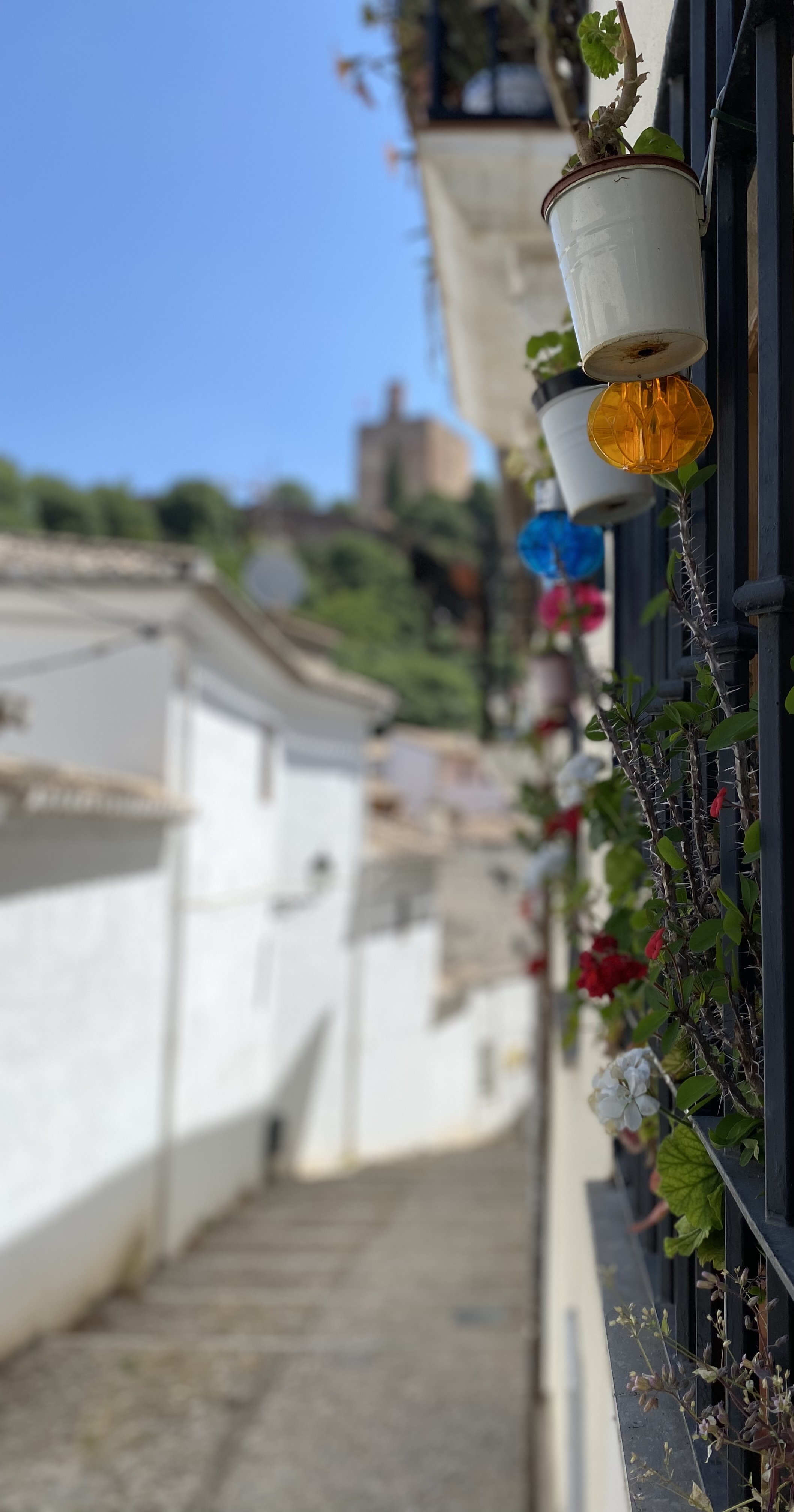
Primero, la capa andalusí: la Alhambra y el Generalife (Patrimonio Mundial), el Albaicín de cármenes y aljibes, la Alcaicería y una lengua —el español— que aquí presume de sus miles de arabismos: aceituna, alberca, ojalá. Ninguna otra ciudad europea conserva tan viva esa conversación de ocho siglos entre culturas.
Segunda capa, la Granada cristiana y barroca: la Capilla Real donde descansan los Reyes Católicos, la Catedral, la Cartuja, los conventos que venden dulces por torno.
Tercera, el Sacromonte y el flamenco: las cuevas, la zambra, un barrio que canta. Y la cuarta, la Granada intelectual: Lorca (la Huerta de San Vicente, Fuente Vaqueros, el Centro Federico García Lorca), Manuel de Falla, Ángel Ganivet, Mariana Pineda, y una Universidad fundada en 1531 que hoy es referente europeo en inteligencia artificial.
Y la cultura que no sale en las postales: el tapeo (la tapa va con la bebida, con o sin alcohol), las cruces de mayo, el Corpus, la Semana Santa, los mercados, el habla granaína. La cultura de Granada es también una manera de estar en la calle.
¿Se puede «estudiar» la cultura? Sí — así
Ver la Alhambra es turismo. Estudiar cultura en Granada es otra cosa: entender qué estás viendo, ponerle lengua y que se te quede. Para eso hace falta método:
- Rutas con misiones: recorridos por la ciudad y su provincia donde cada parada trae léxico y una tarea de habla real («pregunta el precio», «pide la cuenta como un local») conforme al Plan Curricular del Instituto Cervantes.
- Farmacias culturales: dosis de flamenco, fiestas, gastronomía, historia y arte, curadas por nivel (A1–C2), con glosario y reto.
- Espacio V Centenario: un juego introspectivo que recorre la historia de Granada —de la Madraza a la Granada de la IA— y la convierte en memoria personal: cada escena te pregunta por tu propia vida.
- Laboratorio de cine y Escuela de Poetas: la cultura también se estudia produciéndola — viendo cine español y escribiendo tus propios versos ante el paisaje que los inspiró.
Cultura y lengua, juntas (o no funcionan)
Nuestra tesis es simple: la cultura sin lengua se queda en anécdota, y la lengua sin cultura se queda en gramática. En la Clínica Cultural y Lingüística las dos van soldadas: el diagnóstico detecta tu nivel, el tratamiento mezcla gramática y cultura a partes iguales, y todo lo que haces —una ruta, una escena del Espacio V Centenario, una redacción sobre el Sacromonte— deja huella en tu progreso.
Por eso nos llamamos como nos llamamos: clínica (método), cultural (materia) y lingüística (herramienta).
Agenda: cuándo venir
Granada tiene temporada alta cultural casi todo el año: el Festival Internacional de Música y Danza (junio-julio, desde 1952, con conciertos en la propia Alhambra), el Corpus y su feria (junio), las Cruces de Mayo, la Semana Santa, el Día de la Toma y la Fiesta de San Cecilio (invierno), y la temporada de esquí en Sierra Nevada con la costa a una hora. Cualquier trimestre da para un curso entero de cultura.
Preguntas rápidas
¿Puedo estudiar cultura en Granada sin saber mucho español?Abrir ▾Cerrar ▲
Sí. Las rutas, farmacias y escenas del Espacio V Centenario existen desde el nivel A1, con misiones sencillas («saluda, pregunta un precio») y glosarios; la cultura es la puerta de entrada a la lengua, no el premio final.
¿Qué diferencia hay entre esto y una visita guiada?Abrir ▾Cerrar ▲
La visita termina cuando te vas; el estudio deja huella. Aquí cada actividad cultural trae léxico, una misión de habla real y registro de progreso — y se conecta con tu gramática y tu escritura.
¿La cultura de Granada es solo la Alhambra?Abrir ▾Cerrar ▲
La Alhambra es la portada. Dentro están el Albaicín y el Sacromonte, Lorca y Falla, el barroco y los conventos, el tapeo, las fiestas, el habla andaluza y la memoria de al-Ándalus — y la Granada de hoy: universitaria, científica y mestiza.
¿Ofrecéis esto en línea o solo presencial?Abrir ▾Cerrar ▲
Las dos cosas: la plataforma (diagnóstico, farmacias, Espacio V Centenario, redacciones corregidas) funciona desde cualquier lugar, y el programa presencial de 3 meses añade las rutas, las actividades y la vida de la Clínica en Granada.
Estudia la cultura desde dentro
Un diagnóstico, un tratamiento y una ciudad entera como aula. Mira cómo funciona o entra como visitante y prueba una muestra.