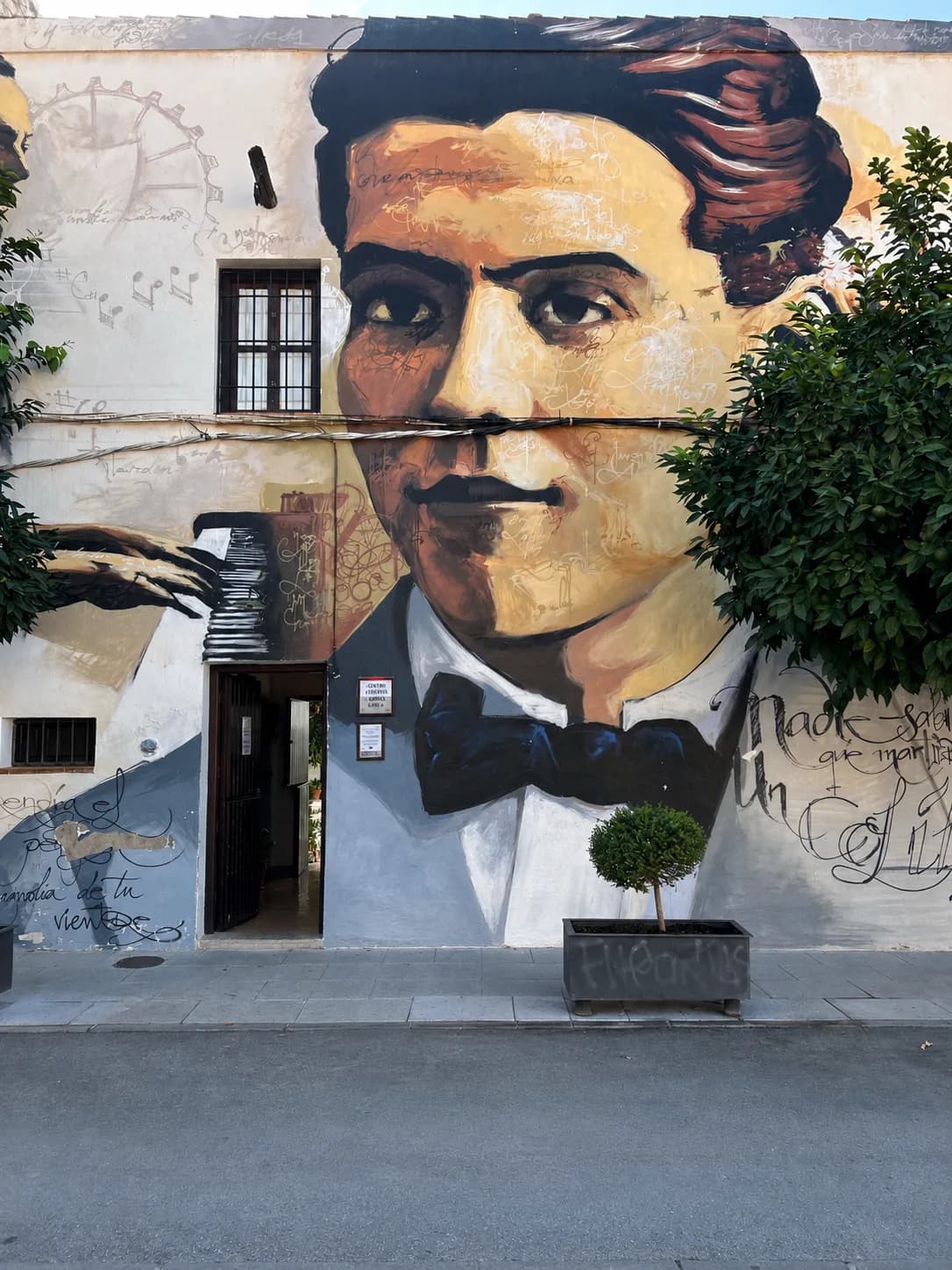
Federico García Lorca cannot be understood without Granada, nor Granada without him. This is the route of his places — from the Vega where he was born to the café of his tertulias — to read the city through his eyes.
Some cities have a poet the way they have a river. Granada has Federico García Lorca (1898–1936), and walking in his footsteps is the best literature — and Spanish — lesson this city can give.
1. The Federico García Lorca Centre (Plaza de la Romanilla)
The starting point: right in the centre, next to the Cathedral, this building keeps the poet’s manuscripts and hosts exhibitions, readings and concerts. Seeing Federico’s handwriting — crossings-out included — cures the fear of writing badly forever.
2. The Rinconcillo at Café Alameda (Plaza del Campillo)
In the premises of today’s Chikito restaurant met el Rinconcillo, the tertulia where a very young Federico sharpened ideas with Manuel de Falla and the artists of 1920s Granada. The word tertulia — gathering to talk for the sheer pleasure of talking — is one of Spanish’s most beautiful, and it had one of its golden tables here.
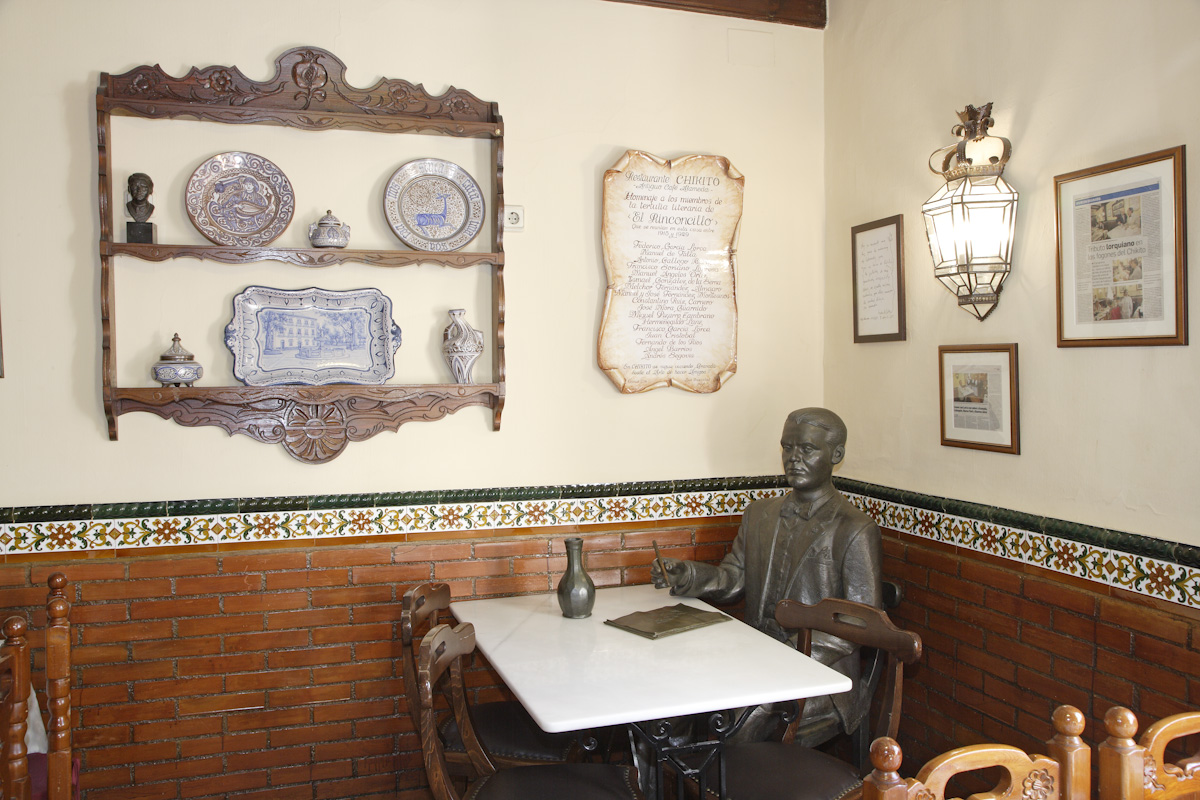 The Rinconcillo corner in the old Café Alameda (today’s Chikito): a bronze statue of Federico presides over the table where the tertulia met. Above it, the plaque listing the names of its members.
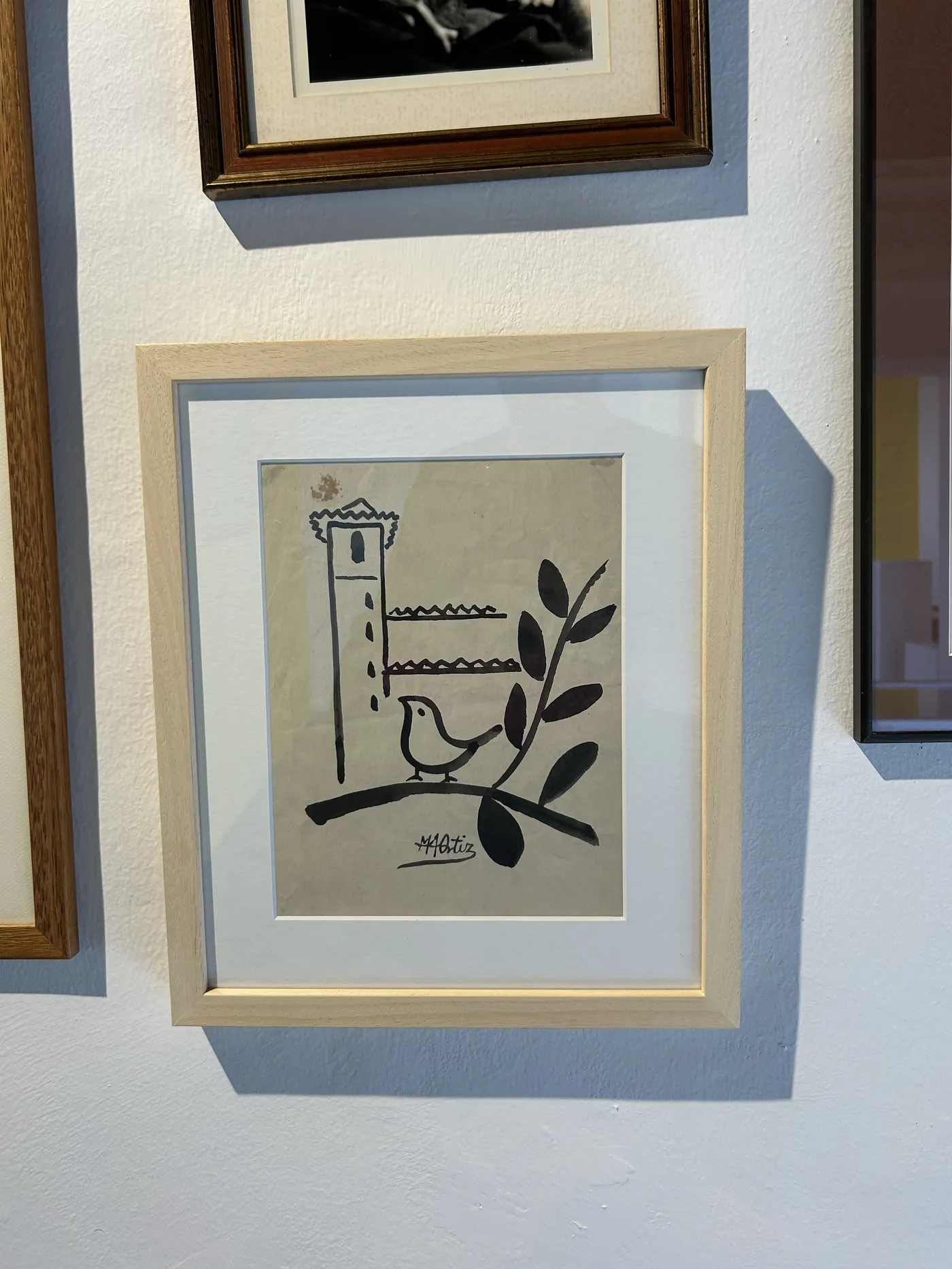 A drawing by Manuel Ángeles Ortiz, fellow rinconcillista and one of Federico’s closest friends: his painting, people said, was Lorca’s poetry made image.
3. The Huerta de San Vicente (García Lorca Park)
The family’s summer house, now a museum inside a park bearing his name. Here he wrote part of Blood Wedding and Yerma. The desk by the window, with the Vega beyond, explains more about his poetry than any prologue.
4. The Vega: Fuente Vaqueros and Valderrubio
- Fuente Vaqueros: his birthplace, with its house-museum. Every 5 June, the anniversary of his birth, the village pays homage with readings and music.
- Valderrubio: the family had another house here, and a neighbour called Frasquita Alba inspired The House of Bernarda Alba. The whole Vega — irrigation channels, poplar groves, silence — is the secret landscape of his theatre.
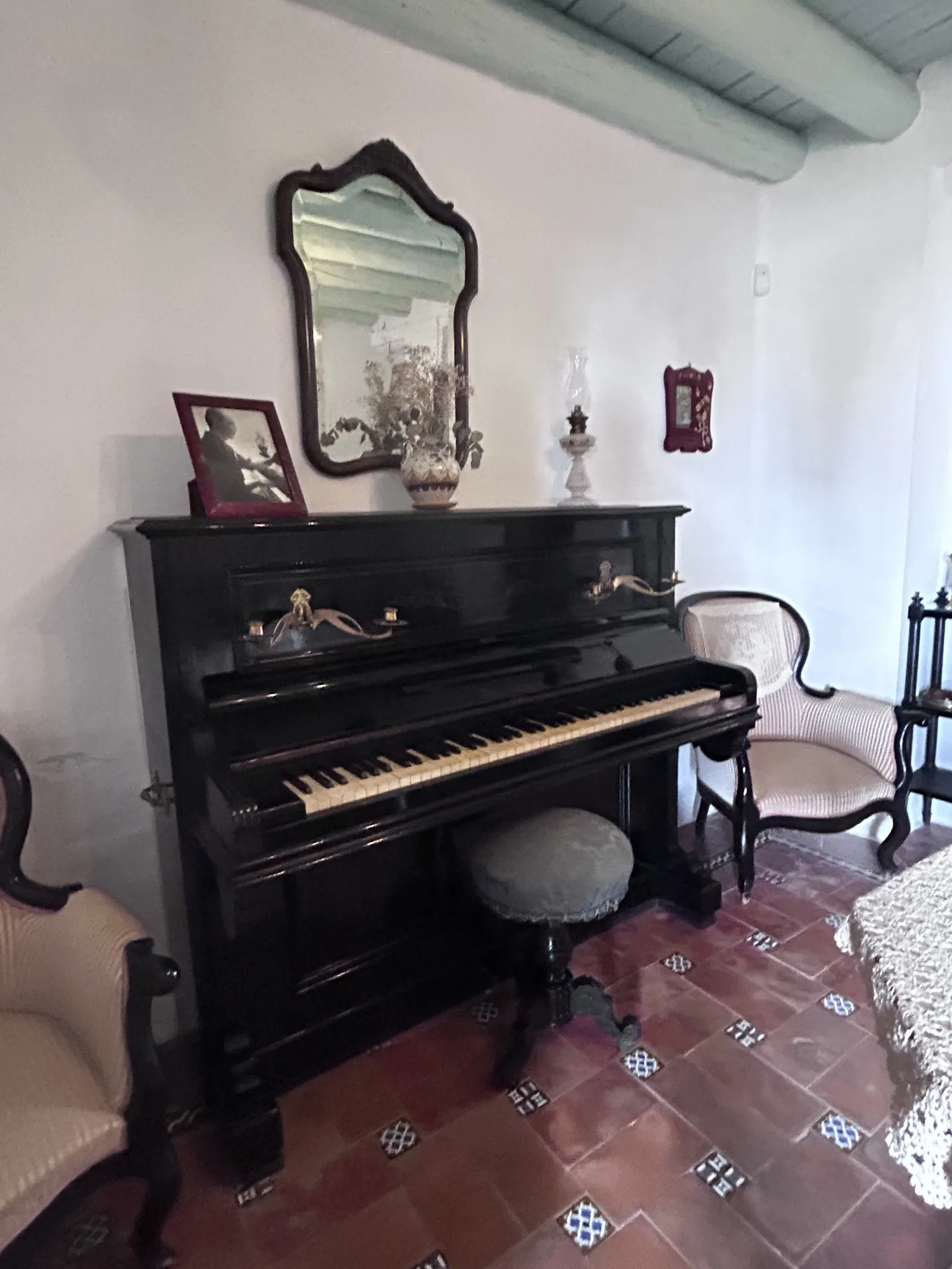 The piano of his birthplace: before he was a poet, Federico wanted to be a musician.
5. The Albaicín and Sacromonte of the Romancero
The Gypsy Ballads are best read on foot: the moon, the cisterns, the steep streets and the echo of the cante. Climb up at dusk, with the duende as your guide, and you’ll see why Lorca said Granada gave him his pena (sorrow) and his joy at once.
6. La Barraca: theatre in a van
In the 1930s Lorca directed La Barraca, a university theatre troupe that took Calderón and Cervantes to the villages of Spain in a truck. It remains one of the most beautiful educational projects in Spanish history: culture as a public service.
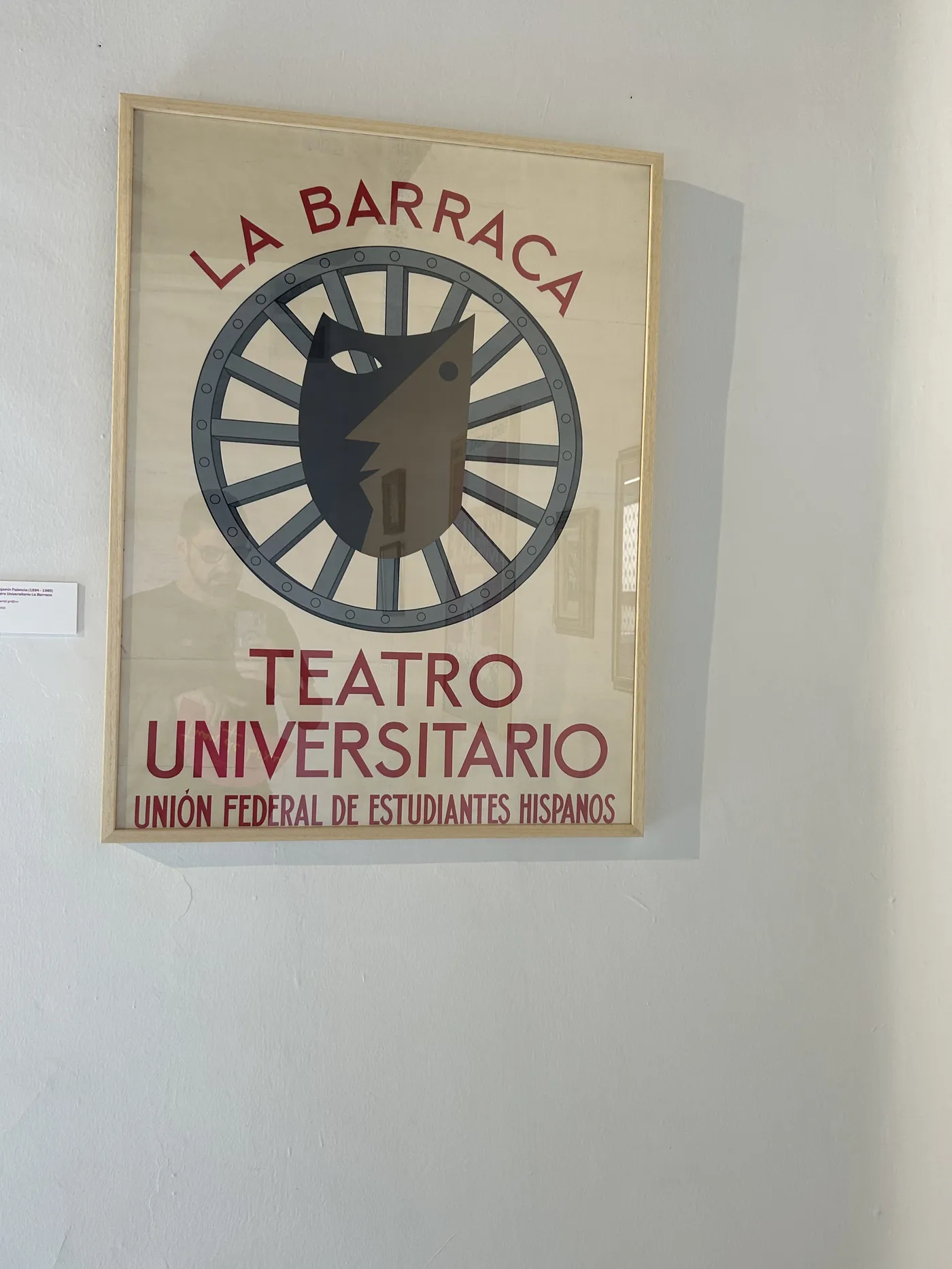 La Barraca: classical theatre for village-square audiences.
7. Víznar and Alfacar: memory
A few kilometres from Granada, between Víznar and Alfacar, Federico was murdered in August 1936, at the start of the Civil War. Today a park bearing his name invites silence. Going there is not tourism: it is memory — and part of understanding this city and this country.
Lorca’s words
His Spanish is a gift for learners: luna, verde («Verde que te quiero verde»), duende, pena, nana, compás. Simple words filled to the brim. Start with the Romancero gitano read aloud: the music does half the work.
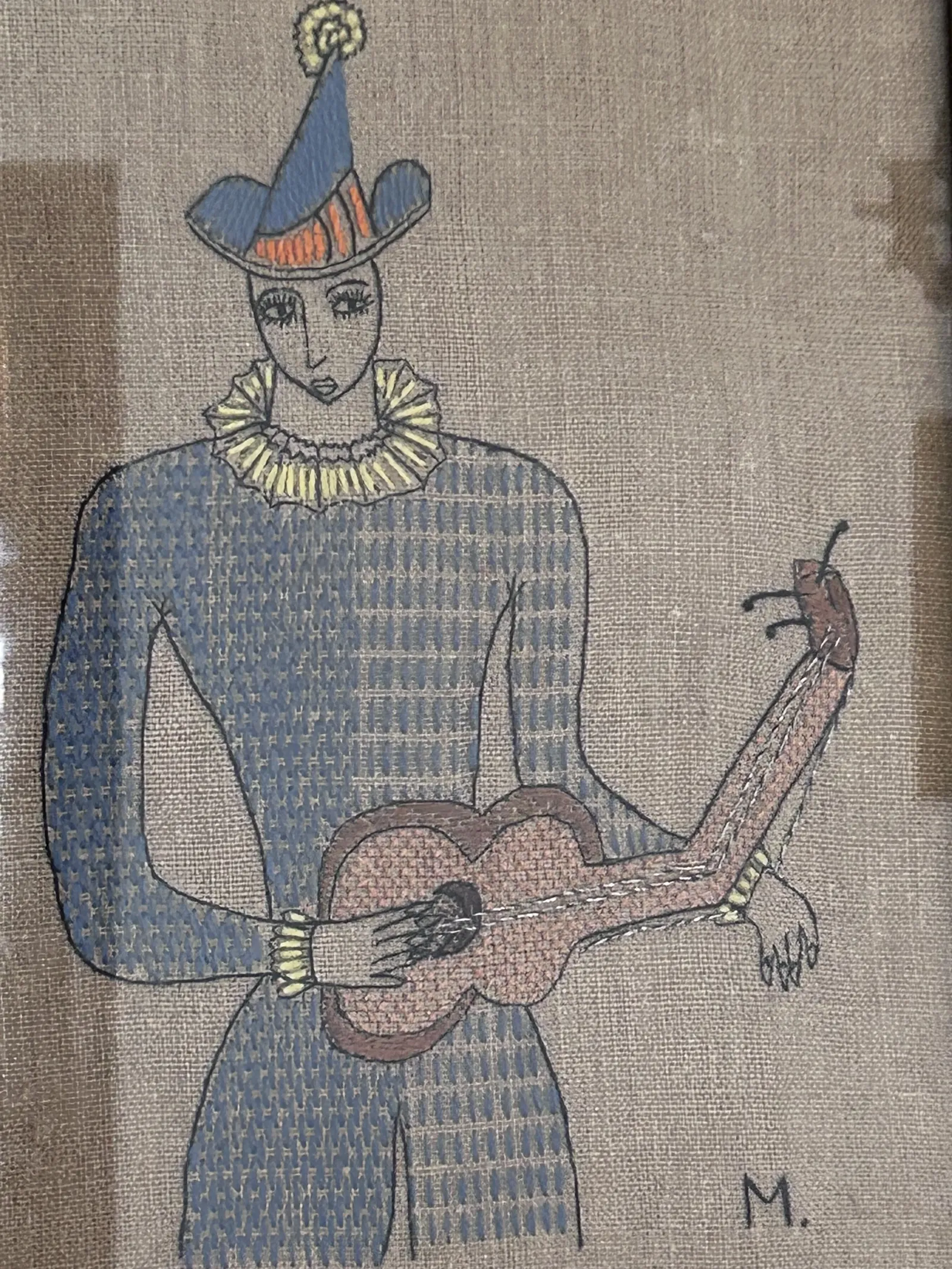 A drawing by Federico embroidered on cloth at the Fuente Vaqueros birthplace: his world fit equally in a verse, a guitar or a thread.
At the Clinic, the School of Poets writes in dialogue with this tradition, and our cultural routes pass through several of these places. Granada reads better with Federico in your pocket.
Want to learn Spanish like this?
The Clinic turns Granada into your classroom. Start with your diagnosis.
Get started